
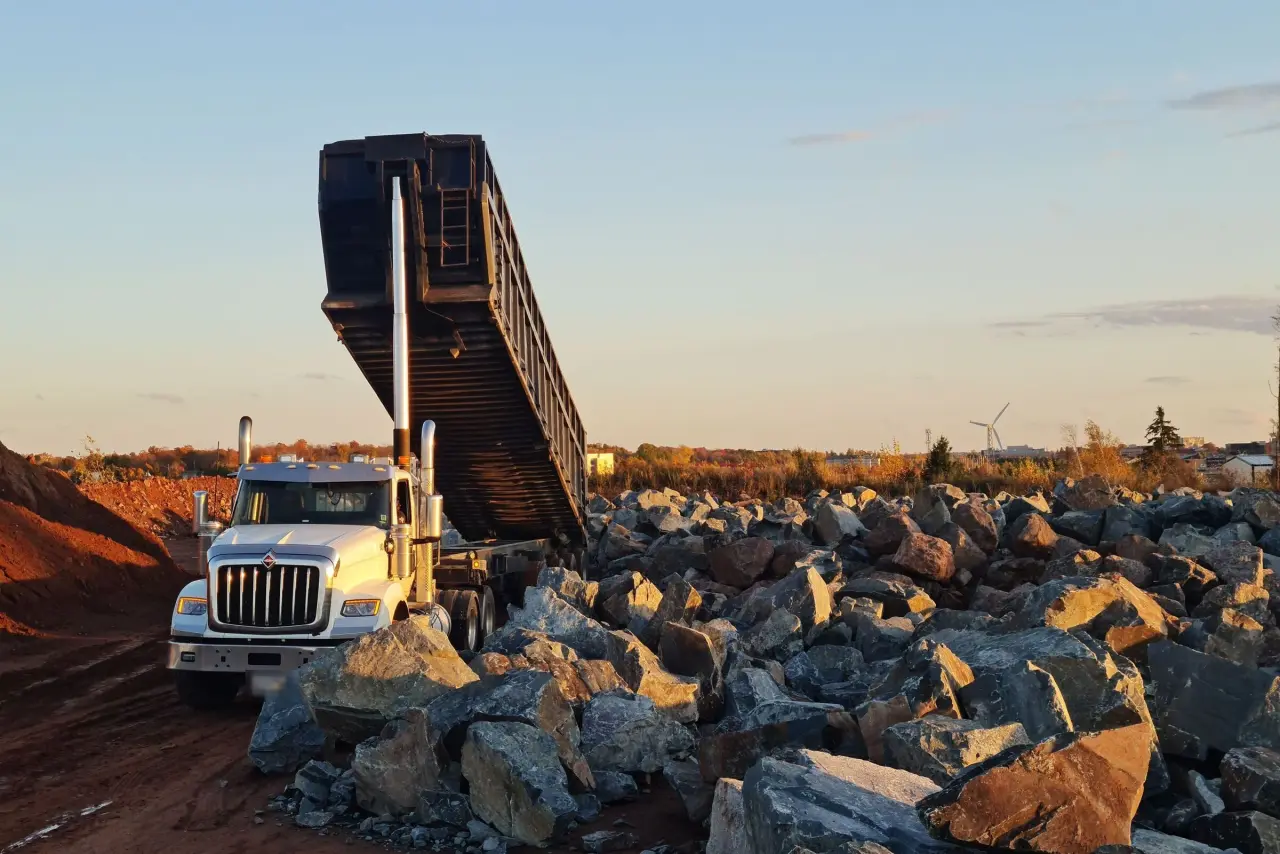
Dump Truck Insurance in Texas
Dump truck insurance covers liability for the damage your truck does to others, physical damage to the truck itself, and the load and job-site risks that come with hauling dirt, rock, sand and demolition debris. What you pay depends a lot on your radius: a truck that stays inside 50 to 100 miles and never leaves Texas is a different risk than one running interstate.
Most dump trucks run local. A policy written as if yours runs long haul costs you money every month. We build the policy around your routes, your radius and your filings, and we quote GEICO, Progressive and other carriers to find the right fit.
What a dump truck policy includes
- Auto liability
- Pays for injuries and property damage you cause on the road. A loaded dump truck is heavy, so the claims are big when they happen.
- Physical damage
- Collision and comprehensive for the truck and any trailer. A lender on the truck will usually require it. Our guide to physical damage coverage for commercial trucks goes into deductibles.
- Cargo or hauled material
- Aggregate and fill rarely need a big cargo limit, but some contracts still ask for motor truck cargo insurance anyway. We match the limit to the contract.
- General liability
- Covers damage off the road, like a load dumped on the wrong spot or a cracked driveway at a job site. General contractors often ask for it before you can work.
- Workers' comp
- For your drivers and helpers. Texas doesn't require most private employers to carry it, but private employers who contract with government entities have to cover the employees on that project, and many GCs ask for it too. See workers' comp for Texas contractors.
Intrastate or interstate: why your radius changes the price
Trucks that cross state lines are interstate carriers, with a longer list of federal filings and compliance work. A dump truck that works only inside Texas is an intrastate carrier. In Texas that means a TxDMV number once the truck is over 26,000 pounds, and a Form E proof of insurance filed by the insurer.
Underwriters pay attention to this. Shorter routes mean less time on the road, roads the driver knows and fewer surprises.
We've worked with operators who saved thousands of dollars a year once their coverage matched how their trucks actually run, instead of being priced like long-haul carriers.
The catch is that a generic trucking policy won't give you that credit on its own. Your radius, your garaging address and the materials you haul have to be written down correctly on the application, and that's the part we handle.
Dump truck operations we insure
We write dump trucks for owners who haul for themselves and for those who haul for others.
The policy looks different for each one, so tell us which of these fits you:
- One truck, owner-driven
- An owner-operator hauling for local contractors and quarries. Often the simplest policy to write, and radius makes a big difference.
- Small fleets
- Two to ten trucks with hired drivers. Driver records and hiring standards carry the most weight here.
- Contractors who own a dump truck
- A site-work, landscaping or demolition company with one dump truck alongside pickups and trailers. We can often write the dump truck with the rest of your commercial auto.
- Haulers for hire
- Trucks paid by the load or the hour for other companies. Contracts often set the liability and general liability limits, and we match them.
- End dumps and transfer trucks
- Tractor and trailer setups that cross into heavier freight work. These can run farther than a straight truck, and the policy has to say so.
What dump truck insurance costs
We don't publish one price, because the same truck can price very differently from one operator to the next.
These are the things that move it:
- Radius
- Local and intrastate work usually prices better than long haul.
- Years in business
- A clean first year earns a 20‑30% cut at first renewal; the new-venture surcharge runs to about year three.
- Drivers
- Clean motor vehicle records and CDL experience matter more than anything else you control.
- Truck value and age
- Physical damage is priced on the value of the truck and the deductible you pick.
- What you haul and for whom
- Construction debris, aggregate and contract limits from the GC all show up in the quote.
Filings we handle
Texas intrastate carriers need a Form E on file with TxDMV, and interstate carriers need federal filings with the FMCSA.
We file them for you when the policy binds and keep them current at renewal. Our truck insurance filings page lists each form and when it's needed.
Common dump truck claims
Knowing where dump truck claims come from helps us set the right limits. The big ones are rear-end collisions with a loaded truck that can't stop short, and rock coming off the load and cracking a windshield. After that come rollovers on soft ground at a job site, and damage to a driveway or an underground line when a truck backs in to dump.
Some of those land on your auto policy and some on your general liability, so we check that both are in place and that the limits match your contracts. If a claim does happen, call us first and we'll walk you through it with the carrier.
Why dump truck owners work with Somra
We've been writing insurance since 2014, with 465 policyholders and 108 five-star reviews. Every fleet is different. Tell us how many trucks you run, your average haul distance, the materials you move and who's driving, and we'll build the policy around that.
We can pick up after hours and on weekends. In most cases, we can bind coverage and issue a certificate of insurance the same day, so you're not sitting out a job waiting on paperwork.
Dump trucks questions
More trucking coverage
Let's talk before you renew
Before you renew or take a quote that treats your business like every other trucking company, call us. We'll walk through your routes and radius and quote the right commercial truck insurance. For the state rules, see commercial truck insurance in Texas. Call 281‑766‑0619.